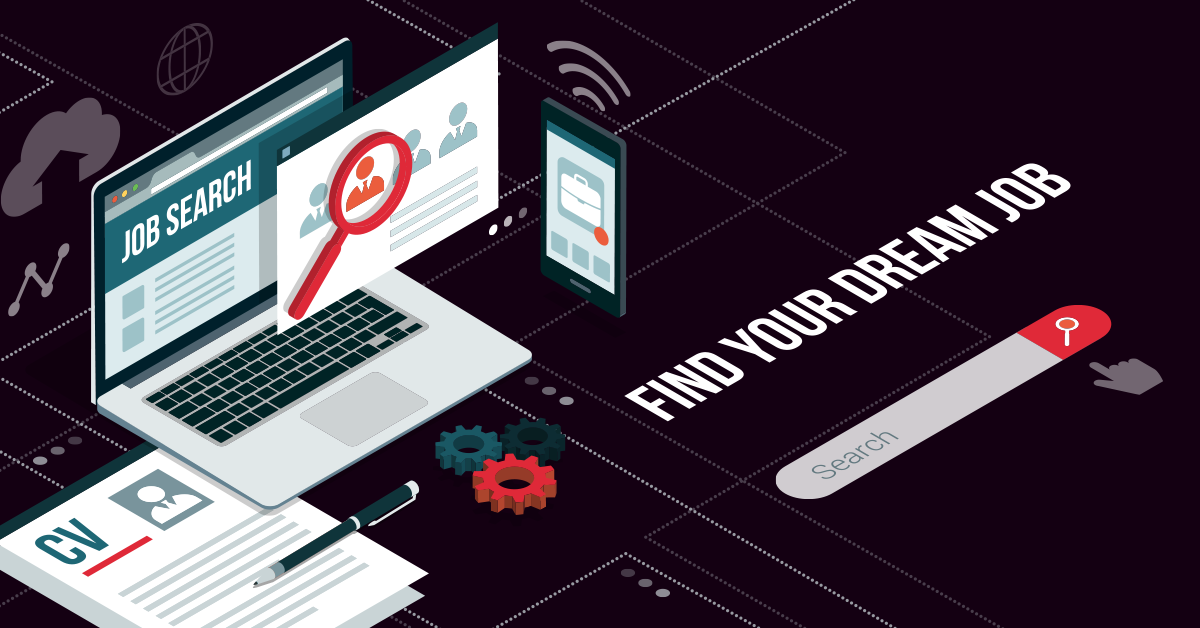

Recruiting has always been a race against time — the best candidates are typically off the market within ten days, while the average hiring process drags on for weeks. That gap is exactly where artificial intelligence is making its mark. The benefits of AI in recruitment go far beyond automating resume screening: staffing agencies are using intelligent tools to source hidden talent, engage candidates around the clock, predict hiring outcomes, and free recruiters to do what machines cannot — build relationships. In this guide, we break down the ten most important advantages, what the data actually shows in 2026, and where human judgment still matters most.
Before the benefits, a quick grounding. AI in recruiting refers to a family of technologies — machine learning, natural language processing, and generative AI — applied across the hiring lifecycle. In practice, that looks like algorithms that match candidate profiles to job requirements, chatbots that answer applicant questions at midnight, tools that draft job descriptions in seconds, and analytics engines that predict which candidates are most likely to accept an offer and stay.
For staffing agencies, the stakes are higher than for a typical corporate HR team. Agencies live and die by speed, volume, and placement quality — three things AI directly improves. That is why the technology has moved from pilot project to standard practice across the staffing industry, a shift W3Global examines in its look at how AI is transforming the staffing industry in 2026.
A single job posting can attract hundreds of applications — many of them AI-generated themselves. Intelligent screening tools evaluate every resume against role requirements in minutes, and initial screening automation can reduce time-to-shortlist by as much as 75%. For agencies handling dozens of open requisitions at once, that speed is the difference between presenting candidates first and losing them to a competitor.
The clearest, most measurable win: LinkedIn's research found talent professionals using generative AI reclaim about one full workday per week. Hours previously lost to sorting resumes, drafting outreach, and coordinating calendars flow back into candidate conversations and client service.
With the average US cost-per-hire sitting around $4,700 according to SHRM benchmarks, efficiency gains compound quickly. Among organizations using AI in recruiting, 36% report direct reductions in recruitment costs — savings that multiply across an agency making hundreds of placements a year.
AI sourcing tools scan job boards, professional networks, and internal databases simultaneously, surfacing qualified people a manual search would miss — including passive candidates who never applied. This matters more than ever now that AI skills have become the hardest capabilities for employers to find globally, according to ManpowerGroup's 2026 survey of 39,000 employers. When talent is scarce, reach wins.
Beyond keyword matching, modern matching engines weigh skills, experience trajectories, and role context to rank fit. The practical payoff for staffing firms is fewer wasted submittals: shortlists arrive tighter, clients interview fewer people per hire, and placements stick. Better inputs at the top of the funnel improve every metric downstream.
Slow communication is the top complaint candidates make about hiring — and a silent killer of agency reputations. AI chatbots and automated messaging provide instant answers, status updates, and interview scheduling around the clock, keeping applicants engaged instead of ghosted. In the AI era of the recruitment process, responsiveness has become a competitive brand asset, not a courtesy.
It sounds mundane, but 35–38% of recruiter time is consumed by interview scheduling and coordination, and tools that fully automate it report 60–80% reductions in coordination time. Multiply that across a staffing team's weekly interview volume and the reclaimed capacity is enormous.
AI can standardize early-stage evaluation, applying the same criteria to every applicant and supporting practices like blind screening. The caveat is real, though: algorithms trained on biased historical data can replicate those biases, and SHRM research found 19% of organizations using AI in hiring reported tools that screened out qualified applicants. The benefit is available — but only with regular auditing and human oversight built into the workflow.
AI turns recruiting from gut feel into measurable science. Predictive analytics estimate time-to-fill, flag which sourcing channels actually convert, and identify candidates most likely to accept and stay. For agencies, that intelligence sharpens client advice too: real market data on salaries, availability, and competition makes every conversation more consultative. This analytical layer is one of the deeper shifts W3Global unpacks in its overview of AI in recruiting and how it's transforming the hiring process end to end.
Perhaps the most strategic advantage for staffing firms: AI lets a team handle surging requisition volume without linear growth in recruiter headcount. High-volume, repetitive work scales through automation while human recruiters concentrate on the highest-value activities — client relationships, candidate closing, and complex searches.
An honest awareness-stage discussion includes the limits. 66% of Americans say they would not apply to an employer that uses AI to make hiring decisions, per Pew Research Center. Candidates welcome faster responses and smoother processes — they reject the feeling of being judged by a machine.
The lesson for staffing agencies is clear: use AI in the recruitment process for sourcing, screening support, scheduling, and communication, but keep humans visibly in charge of interviews, evaluations, and final decisions. Emerging AI hiring regulations in several states point the same direction — transparency and human oversight are becoming compliance requirements, not just best practices. The winning model in 2026 is augmentation: technology handles volume, people handle judgment.
For agencies and employers early in the journey, three practical steps: start with one high-friction workflow (screening or scheduling are the usual candidates), measure a baseline first so improvements are provable, and establish a human review checkpoint before any candidate is rejected by an automated system. Adoption without process change delivers little — the organizations seeing real returns rewired how work flows, not just what software they bought.
The benefits of AI in recruitment — faster screening, lower costs, broader sourcing, sharper matching, and recruiters freed for genuinely human work — are no longer theoretical. With adoption doubling in two years and nearly nine in ten adopters reporting efficiency gains, the question for staffing agencies has shifted from whether to use these tools to how well. The firms that pair intelligent automation with strong human judgment will out-recruit everyone else in 2026 and beyond.
W3Global has spent 20 years perfecting recruitment — and today combines that experience with an AI-powered technology stack, including the TalentPathway ATS and Theo AI sourcing assistant, to deliver qualified candidates faster than traditional agencies can. Whether you need one critical hire or a full talent pipeline across IT, engineering, healthcare, legal, or accounting, our recruiters bring the speed of AI and the judgment of humans to every search. Contact W3Global today and experience what intelligent recruiting really looks like.