
Graduating from college is supposed to mark the beginning of your career. But for many students, getting that first job is proving to be more complicated than expected. Job market challenges for new graduates in 2026 range from increased competition and experience requirements to artificial intelligence, skills-based hiring, networking gaps, and changing employer expectations.
The good news? The market isn't closed to new talent. According to the National Association of Colleges and Employers (NACE), employers expect to hire 5.6% more new college graduates from the Class of 2026 than the previous year's class.
The challenge is knowing how to compete in a hiring environment that increasingly rewards demonstrable skills, adaptability, and initiative—not simply having a degree.
One of the biggest job market challenges for new graduates is that entry-level work itself is changing.
LinkedIn's 2026 Grads' Guide reports that entry-level hiring has declined year over year, even as opportunities continue to emerge in specific industries and functions.
At the same time, NACE's latest data paints a somewhat more positive picture, with employers expecting a 5.6% increase in new college graduate hiring for 2026.
The takeaway is that opportunities exist—but they may not look like the traditional graduate jobs candidates expected.
How to overcome it: Expand your search beyond a single job title. Look at adjacent roles where your existing skills can transfer.
The classic graduate dilemma remains: How do you get experience when every job seems to require experience?
Employers continue to place significant value on experiential learning. NACE reports that internships, co-ops, student employment, and apprenticeships are valuable indicators of workplace readiness.
How to overcome it: Treat internships, freelance projects, volunteering, campus leadership, and academic projects as professional experience. The important part is explaining what you actually accomplished.
Instead of writing:
“Completed a university marketing project.”
Try:
“Developed a social media campaign concept for a student organization and analyzed engagement across three content formats.”
The second version demonstrates a skill.
A degree remains valuable, but it is no longer the only signal employers consider.
NACE reports that approximately 70% of employers use skills-based hiring, up from 65% the previous year.
This means recruiters increasingly want evidence of what candidates can actually do.
How to overcome it: Identify five to eight skills relevant to your target role and connect each one to evidence from coursework, internships, projects, part-time work, or extracurricular activities.
Your resume should answer one question quickly:
“What can this candidate do?”
Artificial intelligence is one of the most significant job market challenges 2026 trends for graduates.
NACE's 2026 Job Outlook data found that AI skills were appearing in an increasing share of job descriptions, while its Spring Update reported that demand for AI skills in entry-level jobs had nearly tripled compared with its earlier survey.
Meanwhile, LinkedIn estimates that 70% of the skills used in most jobs could change by 2030, with AI acting as a major catalyst.
How to overcome it: You don't necessarily need to become an AI engineer. Learn how AI is being used in your field.
A marketing graduate could learn AI-assisted research and content analysis. A finance graduate could explore AI-supported data analysis. A recruiter could learn AI sourcing tools.
The goal is AI fluency + domain knowledge, not AI skills in isolation.
Technical skills may get your resume noticed, but communication and interpersonal skills can influence whether you move forward.
NACE's 2026 research identifies communication, teamwork, professionalism, and critical thinking among the most important career-readiness skills employers look for in new graduates.
Employers also reported that new graduates were generally well prepared, but identified room for improvement particularly in communication, professionalism, and critical thinking.
How to overcome it: Prepare examples that demonstrate these skills. Be ready to explain how you handled disagreement, solved a problem, presented an idea, managed a deadline, or worked with a team.
You can have the right qualifications and still struggle to discover opportunities if you don't have a professional network.
LinkedIn found that 44% of Gen Z respondents said not having the right network was the biggest barrier to landing an entry-level role.
That doesn't mean graduates need hundreds of connections.
How to overcome it: Start small. Connect with alumni, recruiters, hiring managers, professors, former internship colleagues, and professionals working in your target field.
A thoughtful message asking for advice can be more useful than immediately asking someone for a job.
When employers receive large numbers of applications, a generic resume can disappear quickly.
One of the major challenges in the job market is communicating your value in a way that aligns with the specific role.
How to overcome it: Customize your resume around the job description. Highlight relevant skills and accomplishments instead of listing every responsibility you've ever had.
Use measurable outcomes whenever possible.
Another challenge is understanding what employers actually mean when they list requirements.
A job description might mention communication, analytical thinking, stakeholder management, data analysis, or problem-solving without explaining exactly how those capabilities will be assessed.
How to overcome it: Break every job description into three categories:
Then tailor your application accordingly.
Remote and hybrid work have expanded the potential candidate pool for many roles.
That can create opportunities, but it can also increase competition. A graduate applying for a remote position may be competing against candidates from multiple cities, states, or even countries.
How to overcome it: Don't rely exclusively on highly competitive remote positions. Consider hybrid roles, local employers, smaller organizations, and industries where talent demand is stronger.
One of the more frustrating Gen Z job market challenges is discovering that a degree doesn't always translate directly into a matching job title.
Your first role might be adjacent to your field rather than an exact match.
That isn't necessarily a setback.
How to overcome it: Think in terms of transferable skills and career direction rather than the perfect first job. Your first position can help you build experience that qualifies you for the next one.
Writing “excellent communication skills” on a resume isn't particularly persuasive.
Employers increasingly want candidates to demonstrate how they have used their skills.
NACE specifically recommends that students provide examples showing how they have applied skills to solve problems.
How to overcome it: Turn claims into evidence.
Instead of:
“Strong leadership skills.”
Use:
“Led a four-person student team to deliver a research project two weeks ahead of deadline.”
The hiring timeline isn't always predictable.
NACE's research found that employers were shifting a larger share of college recruiting into the spring, with 37% of full-time recruiting and 27% of internship recruiting taking place in spring.
That means silence after graduation doesn't automatically mean you're doing something wrong.
How to overcome it: Keep applying, networking, interviewing, and building skills rather than waiting for one employer's response.
Graduates understandably want a strong starting salary. However, compensation varies considerably by industry, location, role, skills, and employer.
NACE's 2026 research found that graduates value career growth, benefits, job security, supportive coworkers, and starting salary when evaluating employers.
How to overcome it: Research salary ranges before interviews and consider the complete offer—not just base salary. Learning opportunities, benefits, mentorship, flexibility, and progression can significantly affect the value of a first job.
A difficult job market creates an opportunity for scammers.
The Federal Trade Commission reported that losses from job and employment agency scams increased dramatically between 2020 and 2024, with reported losses reaching $501 million in 2024.
Fake recruiters may contact candidates through email, social media, messaging apps, or even impersonate legitimate companies.
How to overcome it: Never pay an employer to get a job. Verify the company and recruiter independently, be cautious about requests for financial information, and avoid offers that promise unusually high earnings for minimal work.
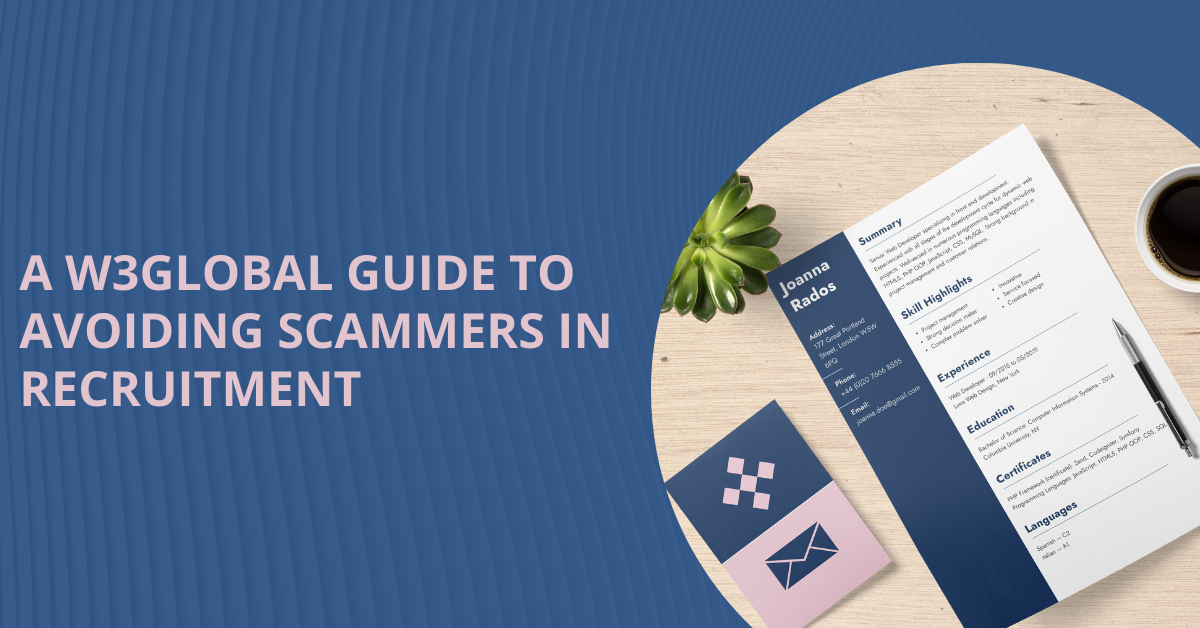
For additional guidance, graduates can also learn how to recognize common recruitment fraud through W3Global's guide to avoiding scammers in recruitment.
The FTC also provides official guidance on identifying job scams.
Perhaps the biggest challenge is that graduates are entering a workforce that continues to change.
AI is changing tasks. Employers are adopting skills-based hiring. New roles are emerging while existing roles evolve.
LinkedIn's research suggests professionals entering the workforce today could hold twice as many jobs over their careers as people entering 15 years ago.
That means career planning shouldn't be about predicting exactly where you'll be in 10 years.
How to overcome it: Build a career around adaptable skills. Learn continuously, stay informed about your industry, build professional relationships, and be willing to adjust your path when the market changes.
The best response to today's job market challenges isn't to apply to hundreds of jobs without a strategy.
Instead:
Build proof of your skills. Create projects, portfolios, case studies, or work samples that demonstrate what you can do.
Learn to work with AI. Understand the tools relevant to your profession and learn how to use them responsibly.
Build relationships before you need them. Networking shouldn't begin only when you're unemployed.
Customize your applications. Make your resume and cover letter relevant to the specific position.
Stay flexible. Your first job may be a stepping stone rather than your final destination.
Keep learning. The skills employers need today may evolve considerably over the next few years. W3Global's 2026 hiring trends report explores how AI, skills-based strategies, and workforce shifts are reshaping hiring.
The job market challenges for new graduates in 2026 are real—but they don't tell the whole story.
Employers are still hiring. In fact, NACE expects new graduate hiring to increase by 5.6% for the Class of 2026. The bigger shift is in how candidates are evaluated.
A degree can open the door, but skills, experience, communication, adaptability, and evidence of what you can accomplish can help you walk through it.
Instead of asking, “Why isn't anyone hiring graduates like me?”, ask:
“What can I demonstrate that makes an employer confident I'm ready to contribute?”
That shift in mindset can turn a challenging job search into the beginning of a much stronger career.
Finding the right opportunity is easier when you have the right strategy and access to the right opportunities. W3Global connects talented professionals with organizations looking for the skills, experience, and potential needed to grow.
Explore career opportunities and take the next step toward building your future with W3Global.